

Would you prefer a long-term win or a short-term win for your business growth?
Long-term gains. Business success takes time, so it's important to think long-term. Meanwhile, you can enjoy the short-term benefits too. The strategy lies in knowing when and how to use each strategy to drive your business forward. Simply being online is not enough; visibility and being clicked on are everything. Whether you are launching a start-up or going to change your digital strategy, know where you are investing your time and money.
Through this blog, you will know the strengths, costs, and timelines of both SEO and PPC. By the end, you decide where to invest or choose the best option based on the business stage, goal, and budget.
Let’s Talk SEO: What Exactly Is It?
The organic process of making your website visible in search engines like Google and Bing without paying for advertisements is SEO (Search Engine Optimisation).
SEO helps your website rank at the top of the Search Engine Results Page (SERP) when an interested customer searches for your product. This is an organic process that finds natural results without paying.
SEO doesn’t work like a paid campaign. If you want a quick and short-term result, then you can go with the paid advertisement. SEO takes time to bring the money to the table. But it will be long-lasting. It requires consistent human hours to maintain success.
For example,
- Your blog’s title is ‘ The Best AI Marketing Tools Your Business Need and Their Applications
- ’The user would search ‘AI marketing tools.’
- As it matches your blog title, your blog will appear.
- This is how SEO works. Slow but steady! Results are steady.
Note: This example simplifies the SEO concept but isn’t as easy as just matching titles. It involves multiple steps, from keyword research, quality content generation, on-page SEO, backlink building, technical optimisation, and improving page speed. SEO requires consistency and smart strategy.
How does it rank?
When you publish a website, it will not magically appear on Google. There is a detailed process through which it ranks.
1. Crawling
Search engines use bots to source content. That’s how we get fresh and updated content on the web. These bots collect information by scanning websites, a process called crawling.
Google's crawlers, for instance, came to our blog post, The Best AI Marketing Tools Your Business Needs and Their Applications, read the content, and clicked on links to other sections of our website.
Good internal linking makes the crawling process easier.
2. Indexing
After being crawled, Google stores your content in its index, which is a massive database of web content. Analysis and preparation of the content for search results take place here. Accurate indexing is aided by proper structure and keyword optimisation.
3. Ranking
The ranking is an important step now. Google ranks your page according to user queries based on a number of criteria, including content quality, backlinks, website loading speed, and responsiveness.
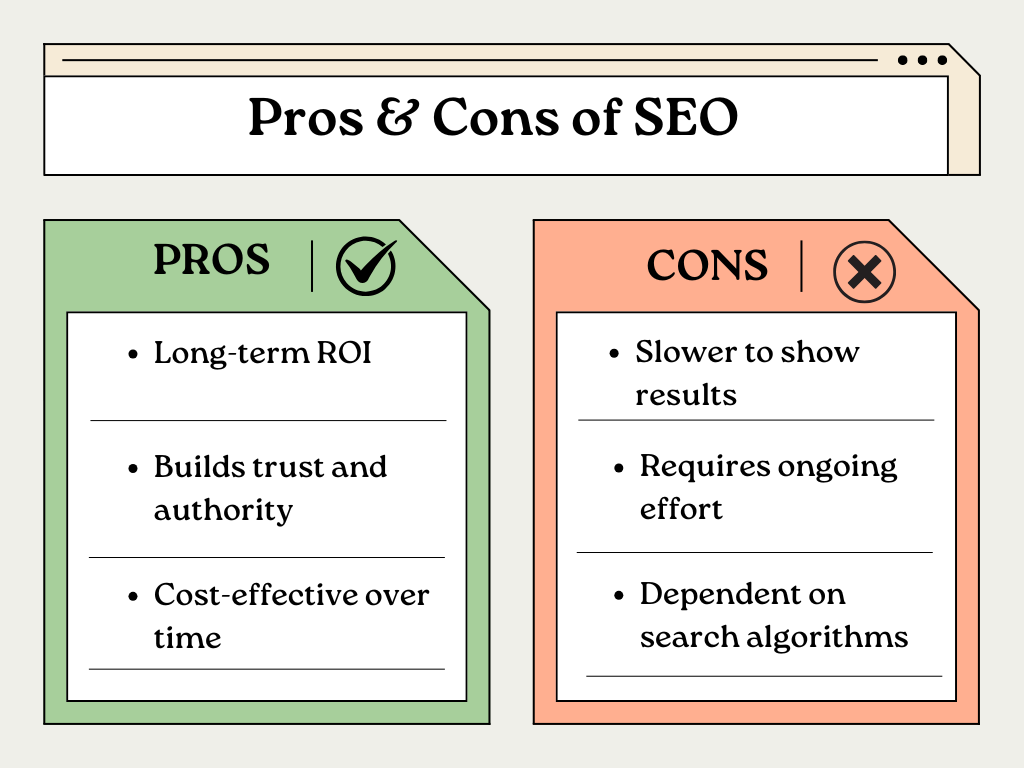
Even digital Mantraaz can make your website rank with our SEO services. Decide it after taking a look at the advantages and challenges of using SEO.
What PPC Is?
PPC (Pay-Per-Click) is a form of digital advertising where you pay a certain amount for each click. People usually run the ad through popular platforms like Google Ads, Microsoft Ads, Meta Ads, Reddit Ads, LinkedIn Ads, and more.
It is not like SEO; PPC delivers quick visibility. Launching a website today results in tomorrow. This is perfect for promotion or timely campaigns.
For example, you might post a blog titled "The Ultimate Influencer Marketing Guide for 2025" on Google. When someone searches for "influencer marketing tips 2025," your blog will appear above organic results right away, providing it with instant visibility and traffic.
This is how it works
Targeting and Bidding
You can control your budget by setting the highest amount you're willing to pay per click. You can also choose who sees your ads based on certain settings.
- Location
- Device
- Time of day
- Demographics
- User intent
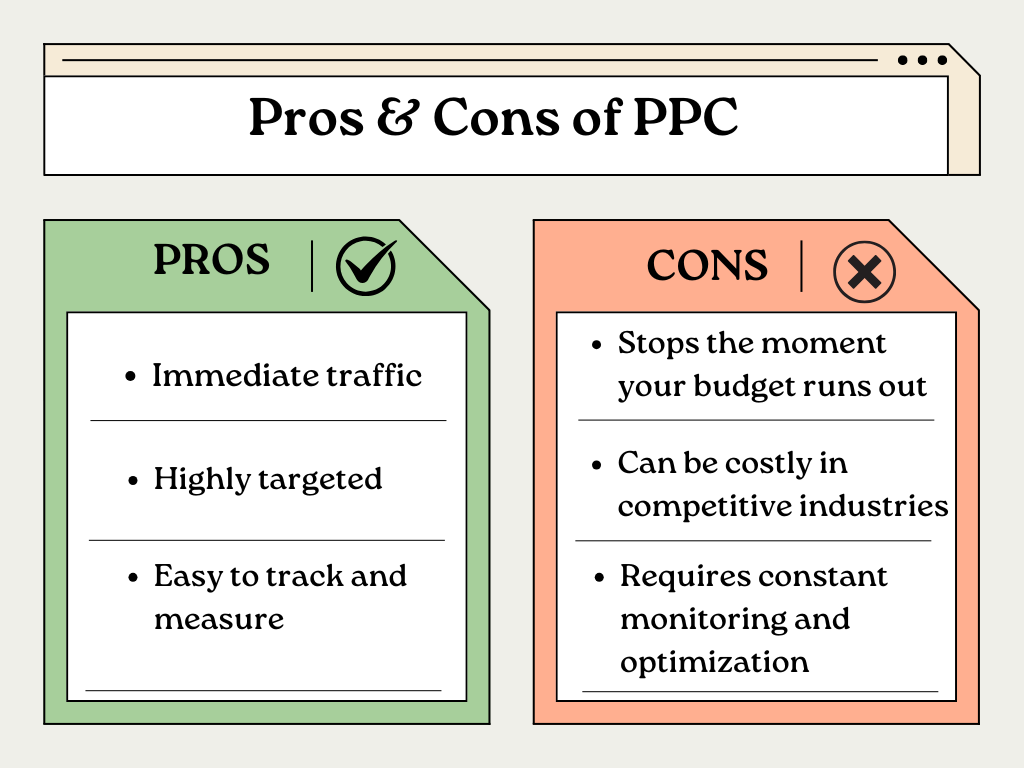
Need paid advertisement for your business? Check out our Digital Marketing Services and grow your brand today.
SEO vs PPC: When to Use What
Choosing either SEO or PPC on the whole will not be a good decision. Instead, it depends upon your Business stage, customer journey, and budget availability.
By Business Stage
New Business:
Start with PPC to get instant exposure and early leads while your SEO groundwork is still building. This helps you test your messaging, landing pages, and target audience faster.
Established Brand:
SEO is often chosen for its sustainable, long-term growth. Your domain authority and content library give you an edge; use them to reduce dependency on paid ads.
By Customer Journey Stage
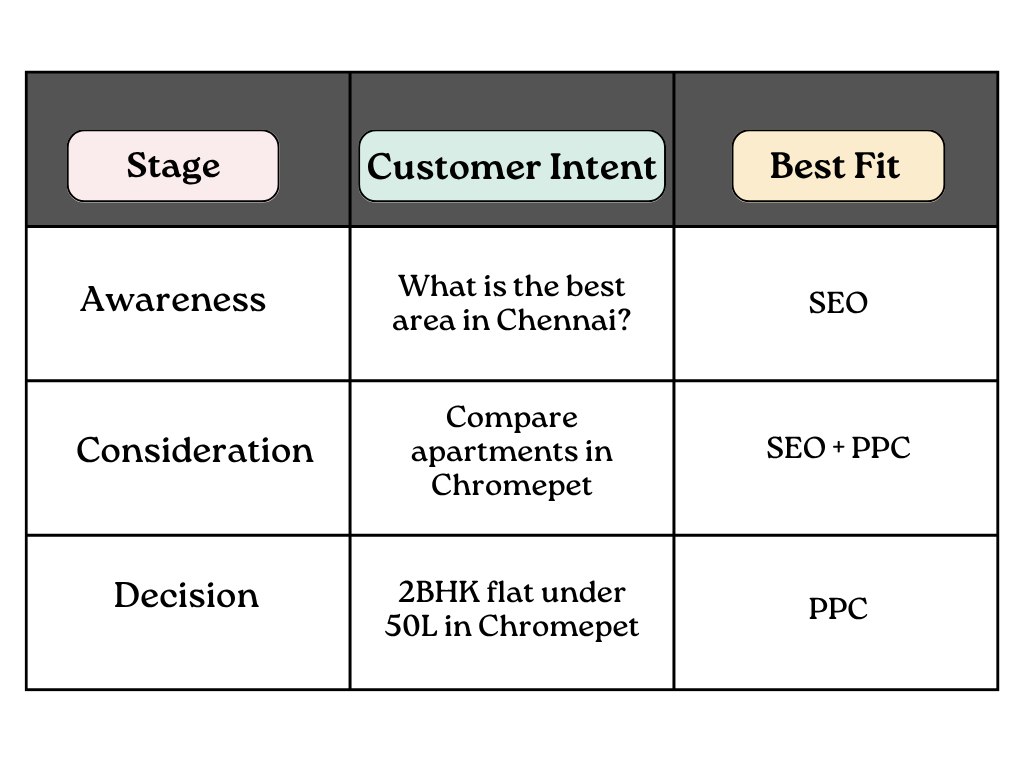
To get maximum ROI and relevance in SEO, stop wasting money on showing ads that are just for browsing. Build a strategy with customers who are interested in the product. At the early stage, use SEO to educate, and later use PPC when the customer is ready.
By Budget & Resources
On a lean budget (< ₹30K/month)?
Start with SEO for foundational visibility. Add low-budget PPC focused only on high-intent keywords (like How to Boost Social Media Engagement).
Limited content bandwidth?
If you can’t commit to regular blogs or website updates, SEO may fall flat. PPC works really well when launching a product or running special offers.
SEO and PPC are smarter in their way. Smart businesses don’t choose one over the other; they use the right one at the right time.
Our Client Success Story
Which Is Better for Small Businesses?
There is no single way, but we can combine both SEO and PPC for a small business.
Effective strategies for small businesses include building a strong foundation and coordinating with your resources and goals. Branded PPC and Local SEO make a strategic combination. Branded PPC advertisements can generate immediate traffic from people who are already searching for your product or service, while SEO creates long-term visibility in your community.
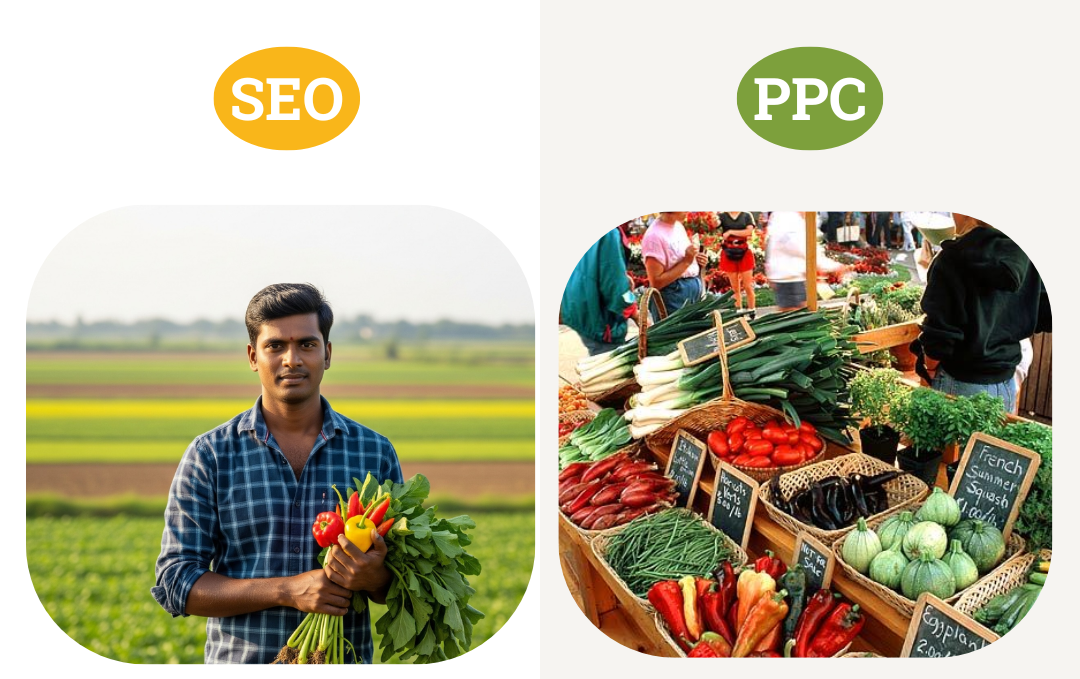
For example, SEO is like farming your vegetables. It requires patience, care, and time to grow, but once it does, you can enjoy a consistent supply at low continuing costs. PPC, however, is similar to purchasing vegetables from the grocery store; it's quick and easy, but you have to pay each time you want more.
What is a wise choice?
- Do you require immediate traffic or leads today? Go with PPC if you want fast results and clear data to see how your ads are doing.
- Want to build trust and stay visible online for the long run? SEO is a smart investment that keeps growing over time.
- Can you afford both? While SEO establishes the foundation for your organic strategy, PPC provides immediate results. This is a hybrid approach.
Remember that the focus is not on SEO vs. PPC, but rather on what your business needs today and where you want to be in six or twelve months.
SEO Even helps PPC. How?
Even though PPC and SEO are sometimes thought of as different strategies, combining them can improve your outcomes. This is how SEO can make your PPC campaigns even better.
Increased Quality Scores:
SEO-optimised pages work well and get loaded at super speed. Relevancy matters for search engines. To give a better user experience, optimise your web pages often. These contribute to a High-quality score. And automatically lower the Cost Per Click (CPC).
Keyword insights:
Look up which keywords people search for the most to help improve your SEO. These keywords can reduce your spending in low-converting PPC campaigns.
Credibility & Trust:
Brand credibility is increased by showing up in both sponsored advertisements and natural results. When your brand appears more than once in the SERP, users are more likely to click.
Stop Making Common Errors
Avoid wasting your marketing budget by being aware of these typical pitfalls:
- Not developing a sustained organic presence and instead depending fully on PPC. Your visibility ends when the advertisement ends.
- Assuming that SEO will be successful without a sound plan or local optimisation, particularly for small or locally based businesses.
- Failing to monitor conversions. Your work is not enough; you have to analyse the results. Data is super important. Check out this data to get the right insights into your SEO or PPC efforts. (Leads, Calls, Sales)
Conclusion
Many smart companies see PPC and SEO as a strategy to expand beyond competitors' tactics. SEO gives trustworthy traffic, and in the meantime, PPC offers rapid and forced visibility.
There are even strategies you can create that result in profit and long-term benefits, depending on your company’s stage and available resources.
Let’s create what suits you. We suggest focusing on your SEO efforts, like content creation, keyword optimisation, and technical fixes. When it’s time for something special, a product launch, a festival offer, or a seasonal sale, it’s smart to run a PPC campaign. It is not SEO vs. PPC; it's always SEO and PPC.
Why pick just one when using both gives even better results?
At Digital Mantraaz, we don’t believe in one-size-fits-all solutions. We take time to understand what your business really needs. Whether that’s long-term growth through SEO, quick wins with PPC, or a mix of both.
We provide end-to-end digital marketing solutions for your business. Give us a call – we’re the people who care about getting you real results.